Studio Views: Holland Cotter on Untethered/Retethered
An absent image
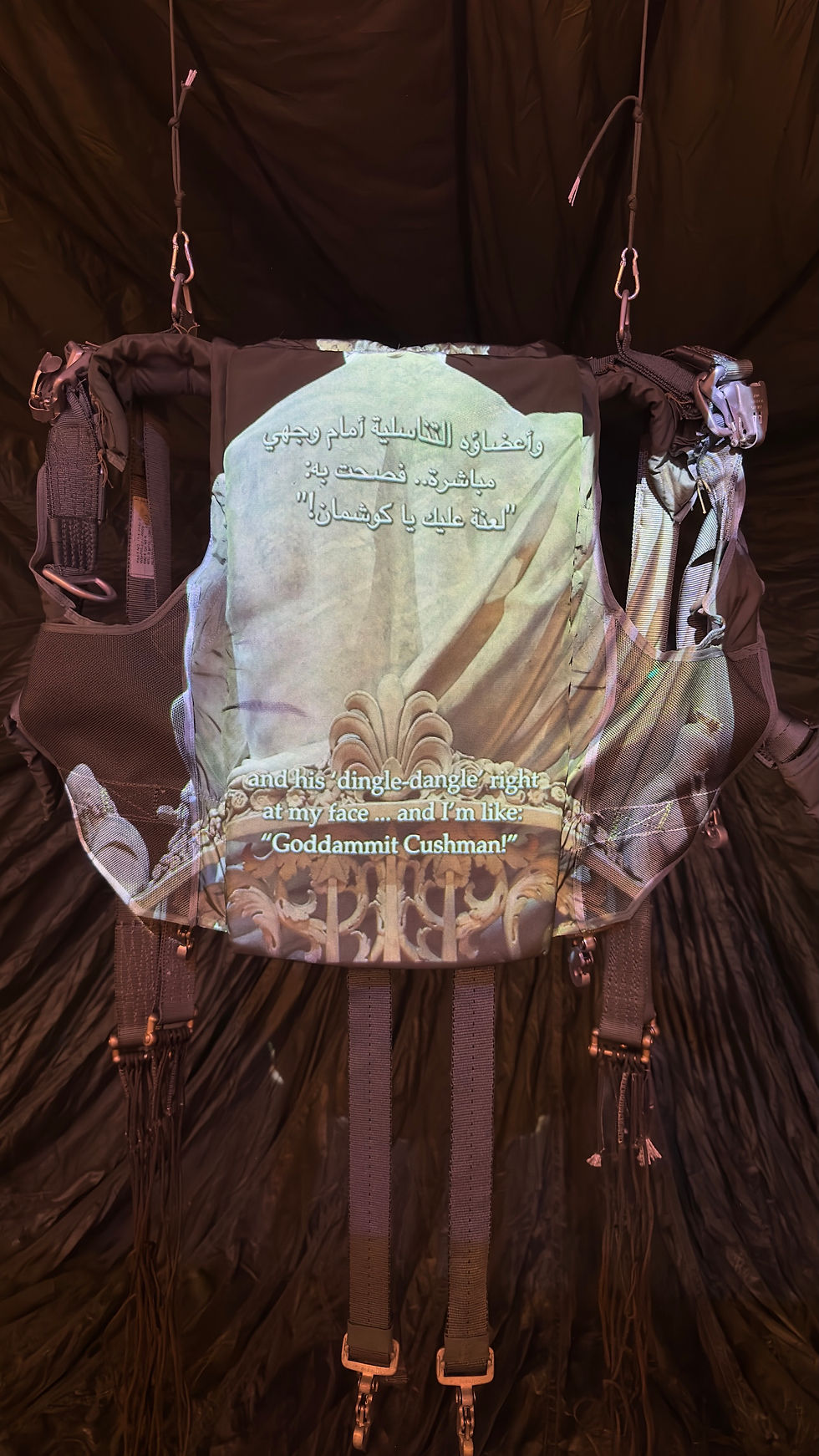
Reading Cotter’s recent essay in The New York Times, I was struck by how strongly it returned me to an image that isn’t present in the exhibited version of Untethered/Retethered. During the installation of Here: Pride and Belonging in African Art at the Smithsonian National Museum of African Art, I’d developed three projection versions of the work. One combined landscapes in Iraq and Afghanistan, footage of a nighttime firefight, and Horatio Greenough’s monumental sculpture George Washington, 1840. Washington’s face was withheld from view. After further internal review, the museum and I agreed to use the landscape-only projection now on view in the exhibition.
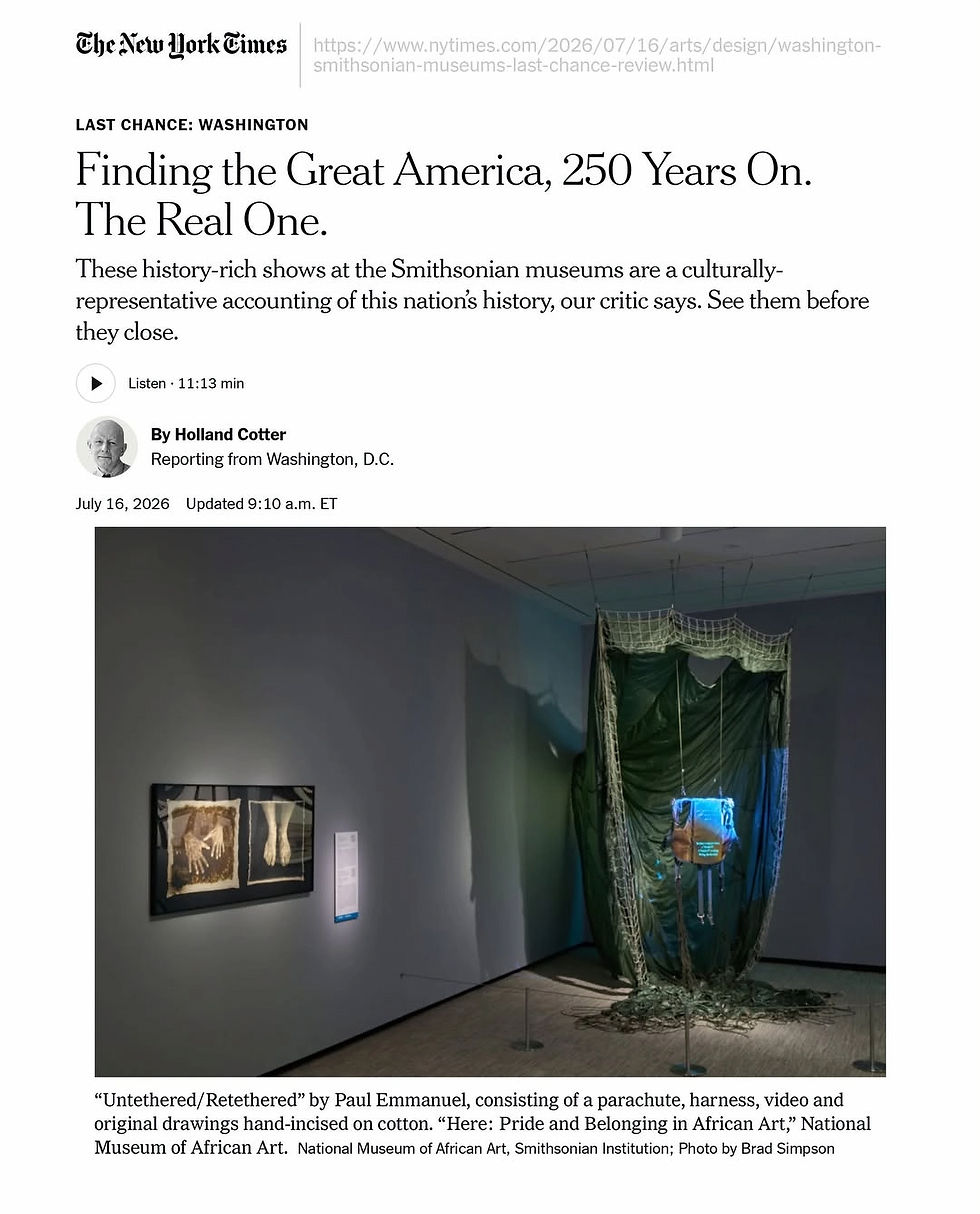
His essay places a group of Smithsonian exhibitions against a narrowed and triumphalist account of American history during the nation’s 250th anniversary. Within this wider argument, he describes Here as a globally minded exhibition, calls Untethered/Retethered an “ethereal installation,” and writes that it:
“…might be read as a vision of safe landing in the supportive company of brotherhood across racial and affectional lines.”
I believe that his reading suggests that the historical and political questions carried by Greenough’s monument hadn’t disappeared when the image was removed. It seems they remained active in the decommissioned military parachute and its severed suspension lines; the detached harness; the juxtaposition of bodies marked by different histories; and the work’s movement between violence and care, detachment and attachment, falling and the possibility of safe landing.
An image can be absent while the social pressures that produced it remain.
For me, the installation-stage projection and Cotter’s essay resonate strongly with one another in this archive. Each approaches, from a different direction, the unsettled historical field from which Untethered/Retethered emerged.