From the Studio: Looking Closely at Here: Pride and Belonging in African Art
Updated: 16 hours ago

On Thursday, June 18, 2026, I’ll be taking part in a public panel discussion at the Smithsonian National Museum of African Art in Washington, D.C., as part of Here: Pride and Belonging in African Art.

The panel brings together curator Kevin Dumouchelle and artists Mikael Owunna, Tyna Abebowale, Leilah Babirye, and myself, whose works are included in the exhibition. It offers a chance to speak about the works and the wider questions of visibility, history, identity, and belonging that move through the show. For me, this moment is also connected to a slower form of attention: looking closely.
The panel is free and open to the public. Book a ticket to the panel discussion through the Smithsonian event page.
Looking Closely at Here: Pride and Belonging in African Art
Alongside the exhibition and panel, I’ve also been involved in the design and editing of the Tour de Force Foundation Close Looking Guide: Queer African Art, developed with texts by Mark Auslander and his students. The guide was created as a mobile-friendly way for viewers, students, and audiences to spend more time with selected artworks from the exhibition, whether before visiting, while moving through the galleries, or after returning home.
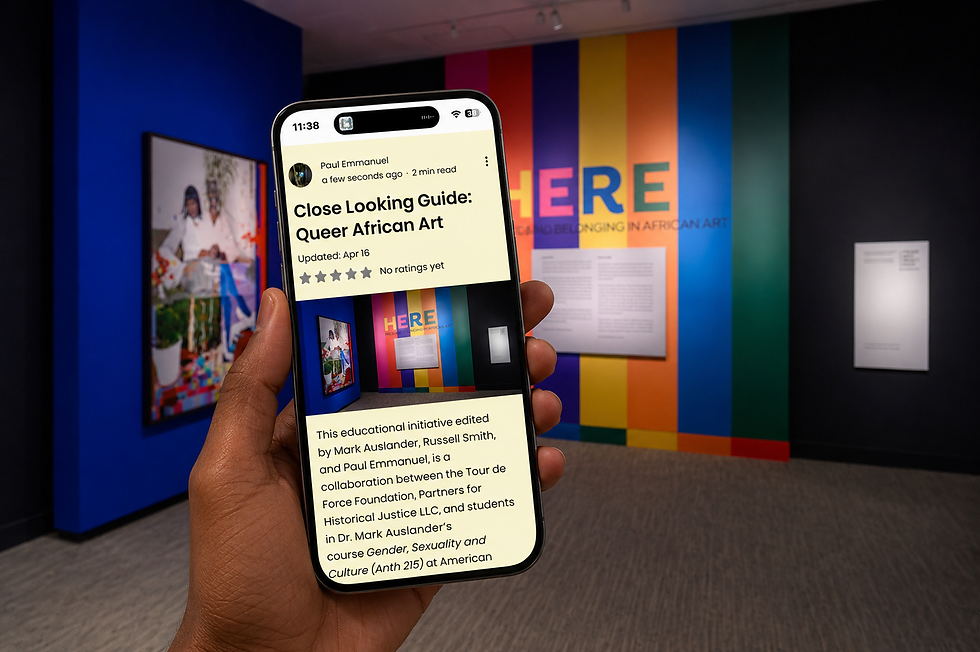
I’m interested in this kind of looking because it asks something different from us. It’s not only about seeing an artwork quickly, naming it, and moving on. It’s about noticing structure, material, image, gesture, absence, repetition, and feeling. It’s about allowing an artwork to unfold over time. That kind of attention has always mattered to my own practice.
The guide can be viewed online here: View the Close Looking Guide.
Field Notes: On View
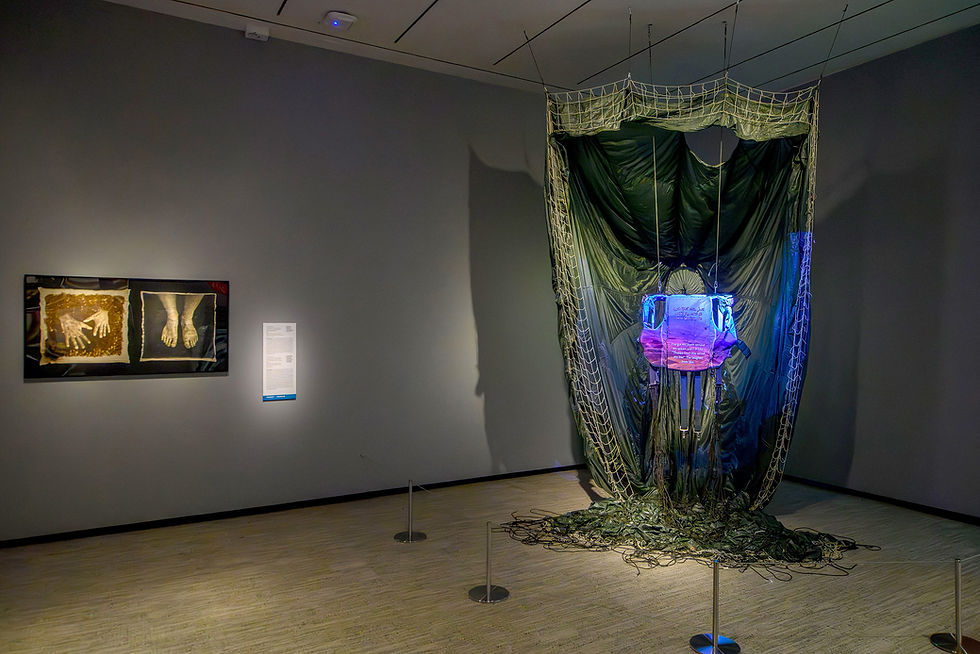
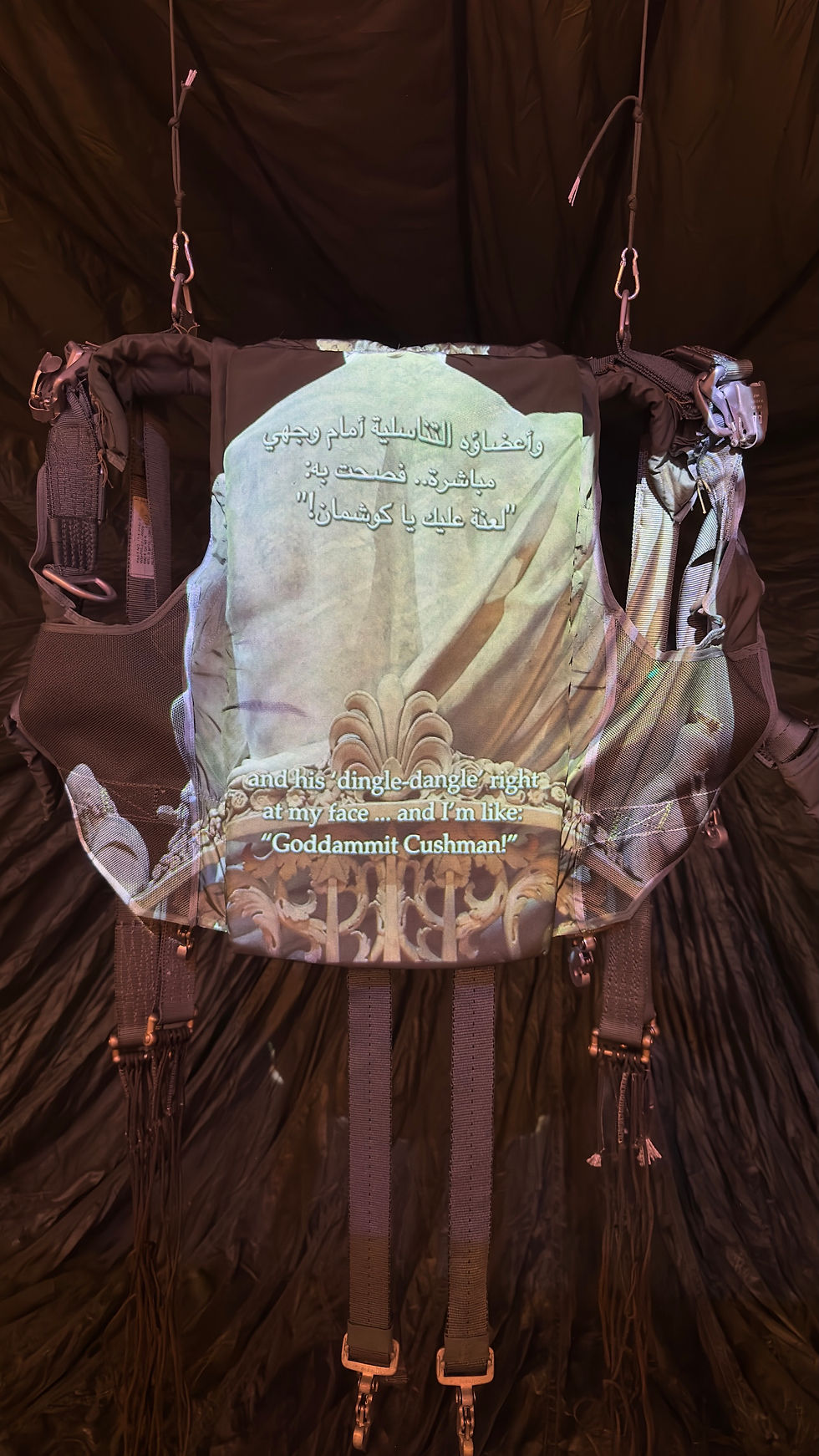
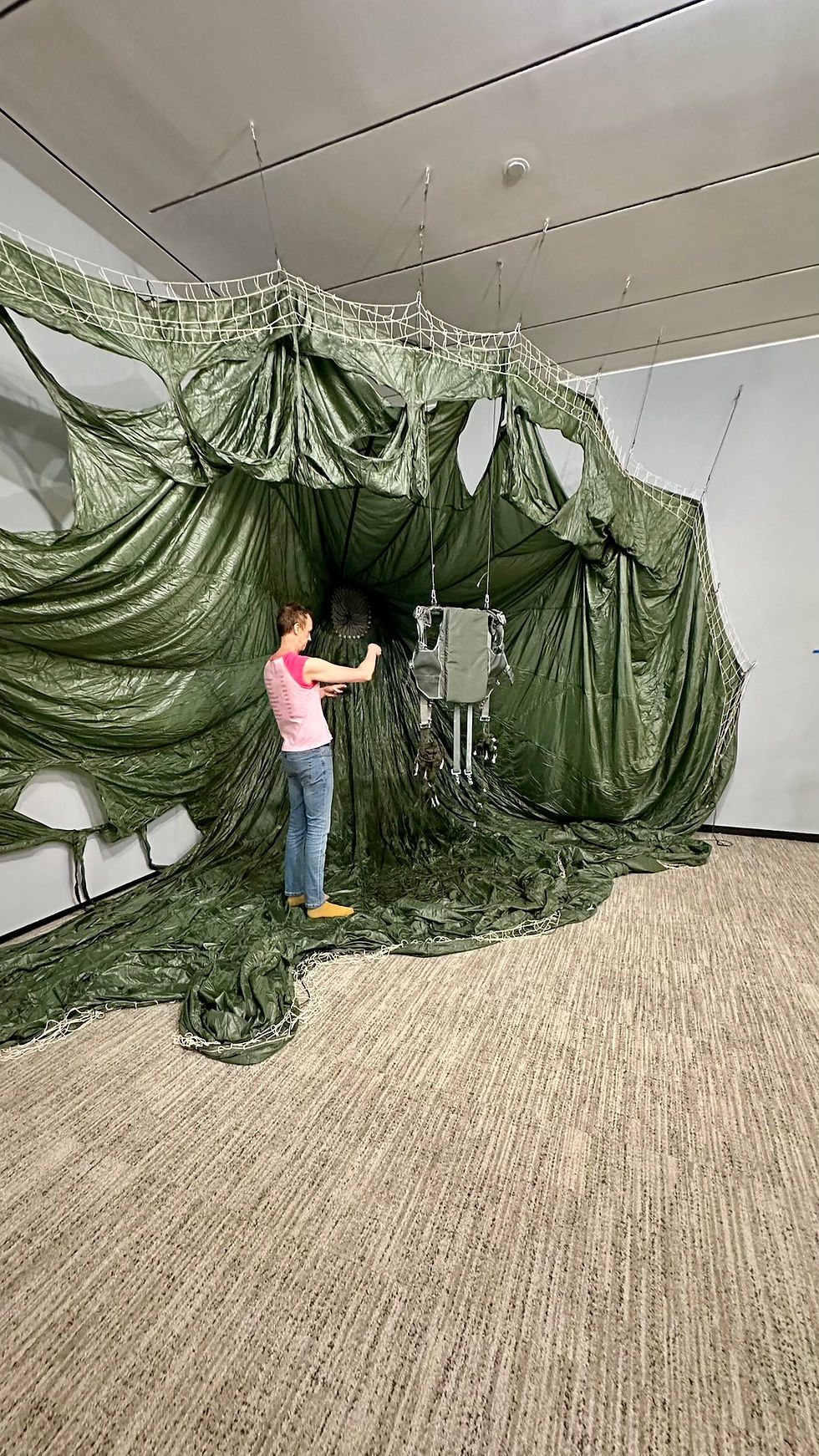
Untethered/Retethered, my installation in the exhibition, brings together a decommissioned U.S. military parachute and harness, severed suspension lines, and video projection. My hope is that the work creates space for viewers to spend time with vulnerability, masculinity, militarization, intimacy, and the ways bodies become tethered to larger systems of power.
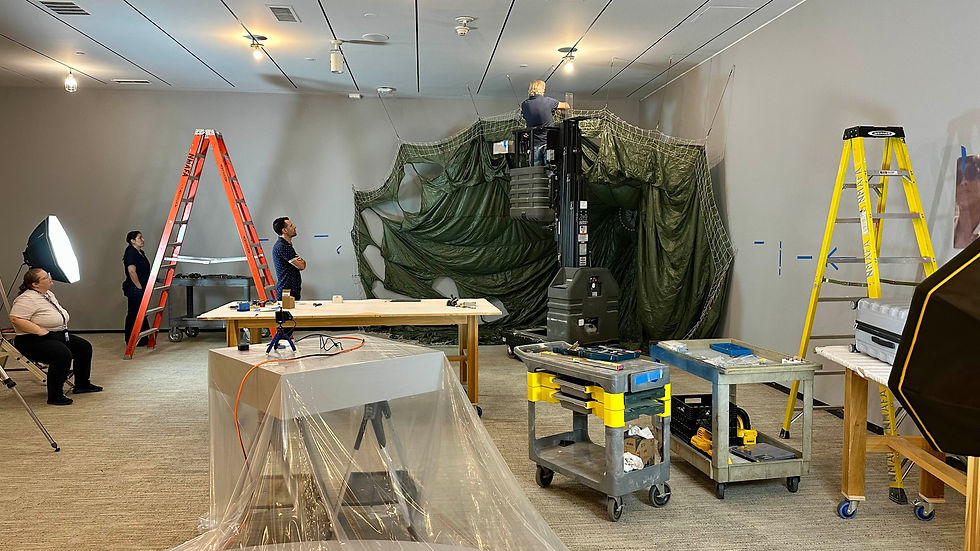
These recent installation photographs from the Smithsonian show the work in the process of becoming public: lifted, suspended, adjusted, projected onto, and finally held in relation to the gallery and the viewer. I value these images because they document the people, scale, and care required to bring the work into the exhibition space.

The suspended harness is central to the work. For me, it holds the absence of a body while also insisting on the body’s presence. I like the idea of video imagery projecting onto a piece of military hardware, potentially changing the meaning of an already loaded object.
Field Notes: In the Studio
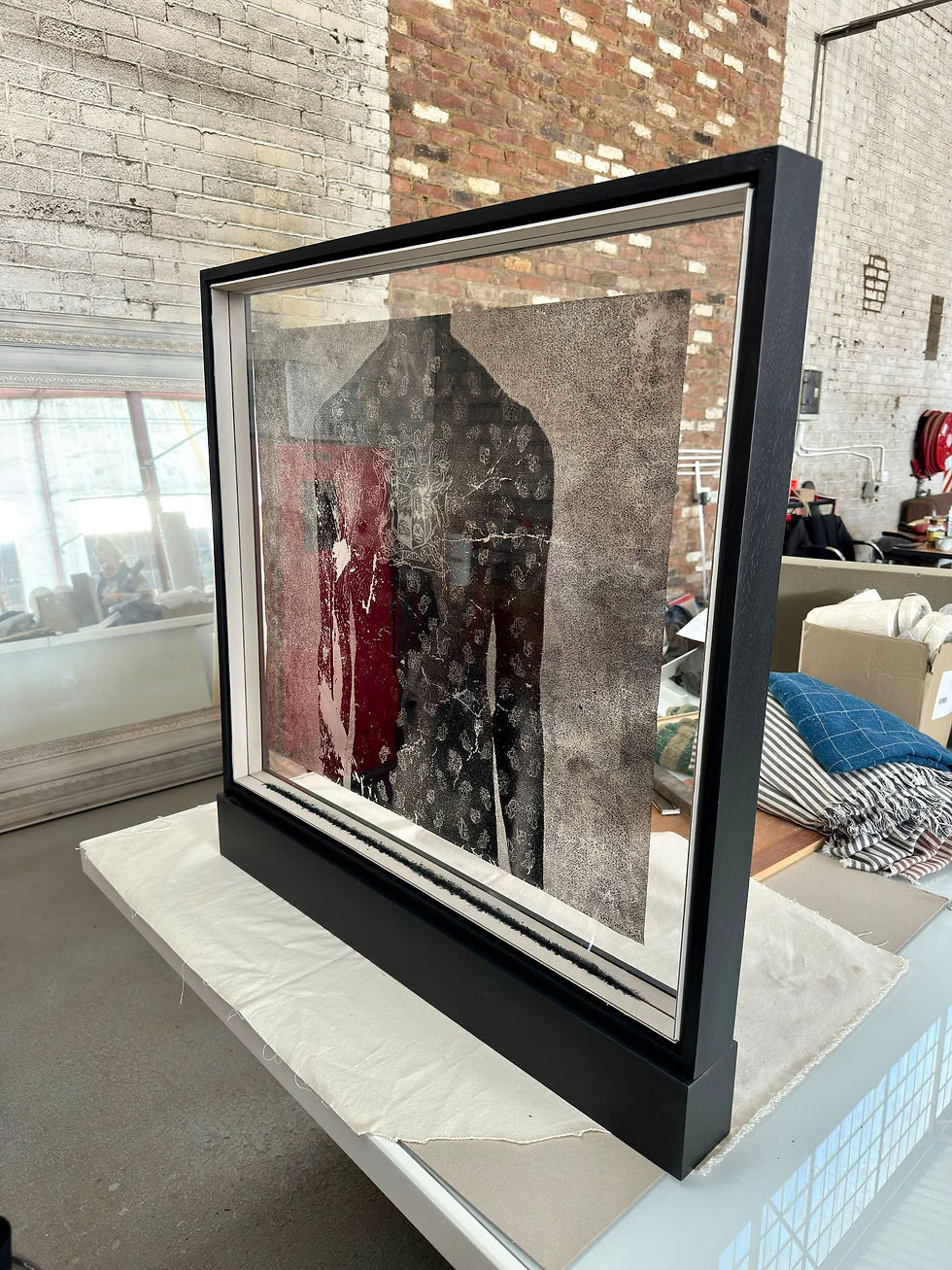
Back in Johannesburg, Ex Unitate Vires has recently been placed in a new frame case. Seeing the work in this form has made me think again about framing, containment, protection, and the way an artwork changes as it moves between studio, archive, exhibition, and future collections.
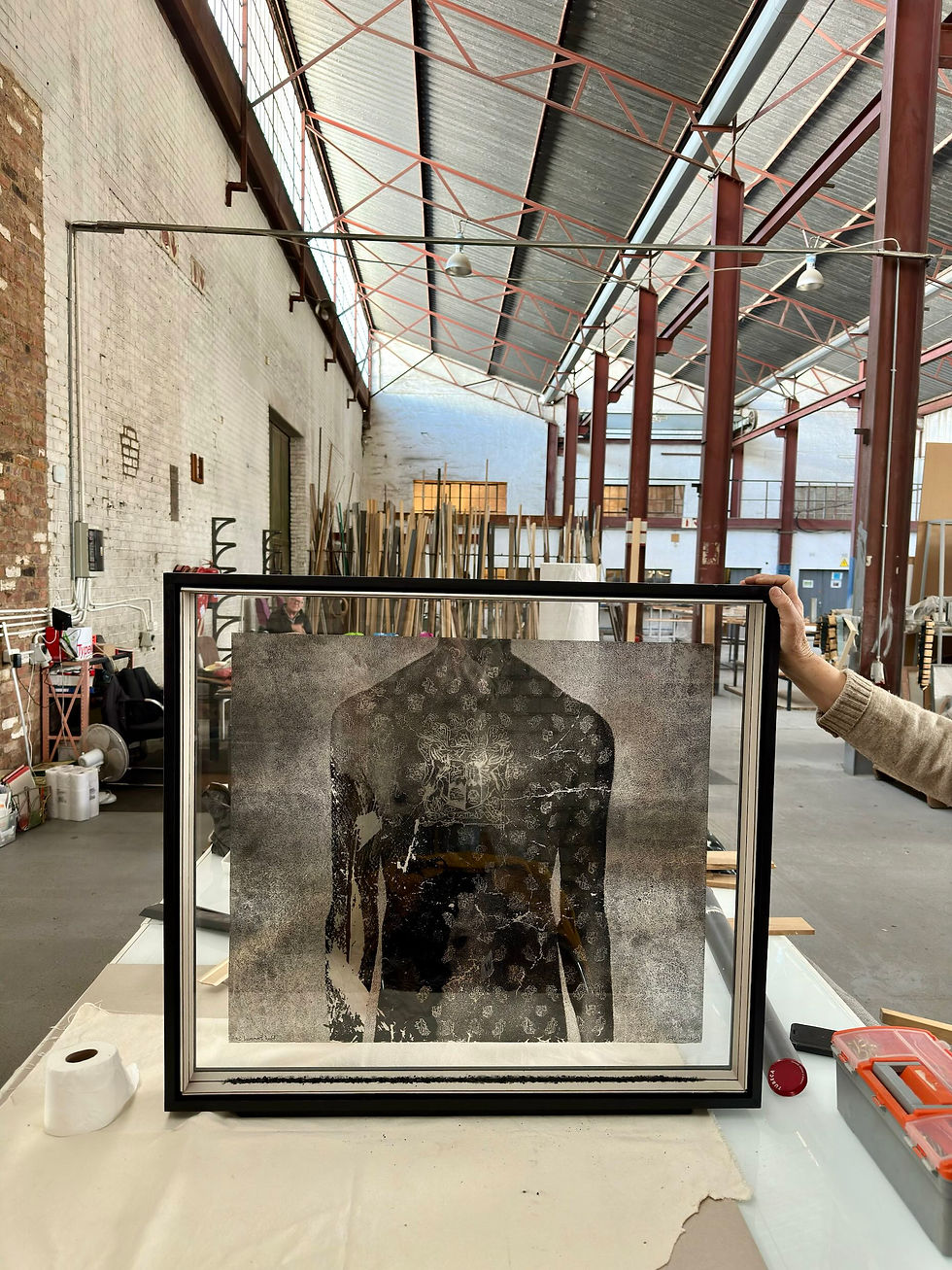
I think Ex Unitate Vires and Untethered/Retethered are connected by questions that continue to move through my practice: how bodies are held by systems of power, how vulnerability is made visible, and how objects carry traces of history, violence, care, and repair.
Related studio note
This visit to the United States will also allow me to participate in The Warrior’s Path / Talking with Monuments discussion work in Milwaukee, developed by Katinka Hooyer at the Medical College of Wisconsin.
I collaborated with Hooyer on the curriculum development for the NEH proposal and the final veteran-facing discussion guide. That work has been especially meaningful to me because it connects directly with questions that also move through Untethered/Retethered: militarization, moral injury, public memory, monuments, vulnerability, and the ways individual bodies are drawn into larger systems of power.
The Smithsonian panel will be one public conversation around the exhibition. The Close Looking Guide offers another, quieter way in. The installation photographs, studio images, and related research all belong to the same unfolding field around the work. Each is an invitation to look more closely.